Join Me to Write under a Provençal Sky
My workshops bring us together around a table in conversation with each other and with literary texts, using this as a catalyst for our own writing. Whether exploring what it means to be a woman or how a city’s muse can beckon us, each session celebrates the beauty and power of literature and the words we find within ourselves.
Current Sessions
Sips and Solidarity: A Women's Poetry Café
Wednesdays, 10 am - noon
Le Garde Manger, 37 Cours Sextius, 13100
Aix-en-Provence
How have poets used their craft to capture what it means to be a woman? This workshop explores poetry rooted in beauty, strength, identity, and survival. We’ll read Ada Limón, Marge Piercy, Lucille Clifton, and others, discussing poems that speak to our shared experience before picking up our own pens. You’ll leave feeling inspired, empowered, and part of a community of strong, insightful, creative women.
* This weekly workshop is for women and non-binary writers. Drop in once or return to deepen your work.
The Muse of Aix: A Workshop in Seeing and Writing
Thursdays, 10 am - noon
Le Garde Manger, 37 Cours Sextius, 13100
Aix-en-Provence
Every place has its own essence — a landscape of memory, imagination, and experience that shifts with each person who passes through. Aix-en-Provence is no exception. This workshop explores the pleasure and power of capturing place in memoir, poetry, literary essay, even hybrid forms.
Through reading writers who have brought place vividly to life, we’ll discuss what makes place come alive on the page — then pick up our own pens and find out what Aix has to say through us.
* Each session goes a little deeper — come as your schedule allows, and pick up the thread.
How It Works
Browse and book a workshop
Browse the workshop offerings above and choose the one that calls to you, then book your spot online. Spaces are limited, so early booking is encouraged.
Complete the sign-up form
Sips and Solidarity. A one‑off women’s poetry workshop you can take on its own—or return to on later dates to deepen your work.
The Muse of Aix. Each session goes a little deeper, come as your schedule allows, and pick up the thread.
Come to Le Garde Manger with paper and pen
These workshops are pen and paper — writing by hand is a deep and creative wy to generate work.
We meet over coffee or tea
Le Garde Manger is generously hosting our workshops, and they only ask that each participant buy a coffee or tea (*They are caterers and all food is homemade – you may be tempted by more than their drinks!)
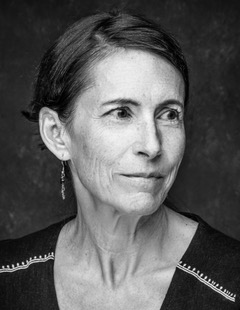
My Approach
As a teacher of literature and writing for over 26 years and a writer myself, I know how much it matters to be part of a community, however briefly. I love conducting these workshops because it’s among curious, creative people that the most interesting and unexpected things happen on the page.
Whether you’re discovering what it means to call yourself a writer, or you already love writing and need to generate new work, you’re welcome here. A variety of perspectives, backgrounds, and voices make the experience richer for everyone.
Testimonials
As someone who became a teacher – and has taught high school Creative Writing classes – the lessons I learned from Wendy became some of the most formative to my teaching pedagogy.
Our time in the classroom and “in the field” with community writing workshops emphasized the importance of learning about the student-writer as a person before getting to know their writing, and providing feedback that places the writer’s voice and their goals at the center.
This is what you can expect when sitting down with Wendy as a writing coach. Anyone looking to cultivate a personal ethic as a writer and refine their writing style should look no further than Wendy Vergoz. I know I wouldn’t be the writer I am today without her.
- ~ Lydia,
- high school English teacher, Poet & Memorist
Wendy brings a wealth of knowledge to the craft of writing. Her commentary on my writing has been thoughtful and insightful, and has helped me to sharpen my poems and my writing skills generally. She approaches her feedback with sensitivity and clarity to ensure that you are saying what you really want to say, and saying it in the best way possible.
- ~ Laura S.,
- Poet
In the four years I worked with Wendy, I grew most as a writer through understanding the power of selectivity (“kill your darlings”). She taught me that articulating one really good idea can be better than trying to express ten great ones.
Wendy tries to really understand what a writer wants to say before guiding them as they figure out how best to say it. Her teaching style is measured and contemplative — she communicates her ideas through conversation and invites writers to share their opinions and counterpoints.
Wendy’s passion for the art of writing extends not only to reading the work of others, but to stepping inside of their minds to fully embrace and share their creative vision. She is honest with writers about how their writing impacts her.
- ~ Joe,
- Poet/Songwriter
During my time working with Wendy I grew as a writer because of how she helped me to cultivate my voice and see the potential my own style of writing could bring. She was encouraging and brought fresh ideas that really helped probe into my true feelings of expression.
I would recommend working with Wendy because of the in-depth attention she pays to each person who comes to her. She is devoted and passionate to those wanting to strengthen their abilities with their writing, and to keep the written word alive.
Wendy’s teaching style is very in tune and adaptive to each person’s needs, and she is always looking for innovative ways to help fellow writers grow. She taught me to explore the in depth capabilities of language and metaphor. She exemplifies great dedication to the craft of creative writing and poetry.
- ~ Nick,
- Poet
The time I spent working with Wendy was invaluable to my development as a writer. She meets writers where they are, then she lifts them higher. She possesses the truly rare ability of making every discussion a safe space where your creativity is nurtured and your voice is amplified.
Wendy dives into a writer’s work with such enthusiasm and passion on their behalf; even for the smallest projects, you leave with a deeper understanding of yourself and what you want to say as a writer. Everything she taught me and the confidence she built up in me? It’s rippled out into all that came after: from law school memos and briefs to poetry, scholarly articles, and essays. I’m forever grateful.
- ~ Hannah,
- Poet/Essayist/Scholar
During my time with Wendy, I experienced considerable growth as a poet. Two of the most valuable lessons that I attribute to my time working with her include finding/honing my voice as a poet and gaining the needed confidence to pursue and earn an MFA in poetry.
Wendy is an unwaveringly honest instructor, and this trait is invaluable in a writing mentor. One of her truest strengths in advising writers is that she offers applicable feedback. She doesn’t simply discuss her students’ works conceptually; she makes sure that her students have clear guidance in improving their pieces, while still encouraging the author’s agency.
- ~ Abby,
- Poet
About Me
Most writing workshops are led by strong writers. What’s less common is someone who understands not just what good writing is, but how writers actually learn and grow.
Unlike most university professors—trained as scholars, not teachers—I hold a master’s in education from Northwestern University, have trained future writing teachers, and bring 26 years of teaching experience to this work. I’ve thought deeply about the art and science of writing and of teaching it, which means I understand the writing process from the inside out.
I’ve loved to write since I was a girl, but I started writing seriously with my high school students when I was asking them to write poems; it didn’t feel fair to ask them to do something I wasn’t sure I could do myself. Within three years my poems were being accepted for publication; within ten I was a university professor, and just a year later, I was training future writing teachers.
My own work keeps me anchored in what it feels like to be a writer: a full-length book of poems, The Unbinding, poems in journals and exhibitions, and an essay published in French. I know what it means to be vulnerable on the page, the frustration of a draft that I can’t get right, and the particular satisfaction—the joy—of finding a poem’s true shape and exact language.